Saturday, 29 October 2016

Editing Task

 
This clip is from the television series 'Bates Motel,' a prequel to Alfred Hitchcock's iconic 1960s film 'Psycho.' This entire scene uses continuity editing and is in a linear narrative to ensure the smooth transition of time to avoid disorientation of the audience as the events are already quite hard to follow. To begin, the lighting is blue toned throughout this clip which is a conventional colour used in the horror genre. The use of mood lighting here is perhaps to achieve a practical or aesthetic effect but more likely to create an ominous, eerie and menacing atmosphere. This effect is successful at the mood the director intends to create, as the colour blue typically holds connotations of sadness. Also, in Iran, blue is symbolic of mourning which is especially relevant and is foreshadowing of the events that will follow. To continue with the use of lighting, it is mainly low-key lighting but there are still many shadows which add to the ambiguity of the actions that will occur. This creates enigma. 

In terms of camera shots, this scene begins with a medium shot of the two main characters of the show; The woman, Norma who is asleep and her son, Norman who is watching over her. The camera then pans to Norman walking away from the bed. Immediately, the audience feel fearful of what his next actions will be. This is achieved by his unpromising demeanour and facial expression. Here, we can say this entire scene so far is an enigma code as we are unsure of what Norman will do or what will follow. Moreover, the lack of sound and over emphasis on the creaking, breathing and other generic, small, diegetic noises reinforces the genre of horror whilst adding tension. This, therefore helps the audience to anticipate with apprehension or fear. 


The next shot, following immediately from Norman leaving the bedroom, is to the stairs of the basement. The jump cut here is very abrupt which makes it effective as  the audience’s attention is forced to focus on Norman so they are aware that something is going to happen. This is also an example of enigma code.  The shot of Norman is an establishing shot and a long shot. This enables the audience to see the basement which gives the impression of something bad happening as well as being a fairly disconcerting setting and conventional of horror. What is most interesting about this specific shot is that it is taken at a low angle. This gives the subject of the shot an impression of dominance. This is significant as we, as the audience are given a reminder of the power he holds. This is because earlier in the show we are aware of the fact that the boiler in the basement, if turned on before being fixed, could release fatal fumes. This is an example of foreshadowing and although some viewers may not realise this, the entire show uses intertextuality. The basement is almost identical to the one in ‘Psycho,’ which not only gives the audience the pleasure of recognition but also forces the audience to realise the reality of what will inevitably happen. This scene highlights on this as the tense mood suggests the build up to this reality is perhaps soon to come. Norman walks down the stairs, towards the camera and then the camera moves to behind the shelf of lethal chemicals and faces Norman walking closer to the boiler. This is an example of an action code. During this part of the sequence, slow, sorrowful music begins to build up. This is another action code as the audience are likely to believe something tragic will happen.


 As Norman tears the caution tape off the boiler, opens and lights it, the light music becomes louder and more eerie. The camera zooms in slowly until it is directly in front of the fire and Norman’s face. This shot is a medium close up. This may have been intentionally used to focus on the character’s expression as he is quite neutral which adds to the disturbing nature of his actions. The camera tilts upwards into the boiler and a tracking shot is used. Here the pace increases significantly. The camera follows through a pipe and follows Norman as we can see the vents being closed through the pipe. The camera shots rotate between being in the pipe and to the house where we can see Norman closing the vents. This gives the audience a slightly disorientated effect. The music here is a especially interesting in the editing of this scene as it is an example of contrapuntal sound.


 The use of contrapuntal sound is generally used to evoke a reaction of shock or to emphasise the feeling of disgust or horror towards what is happening. Here, we could also argue that the use of contrapuntal sound highlights how disturbed and conflicted Norman Bates’ mind is as he is in a state of out-of-body experience. The song used here, ‘Mr Sandman,’ is very obviously a deliberate choice as it is a traditional pop song which heavily juxtaposes with the sinister actions we can see. However, the context of the song could link to the ideas or intentions the director perhaps had. Mr. Sandman was the mythological creature who threw "sand" on people to put them to sleep to give them good dreams. In Norman’s warped state of mind, it may have been likely that he felt he was doing good by putting his mother in a ‘dream’ forever. Whilst this music is playing more close up’s of Norman are shown and what strikes me as interesting is the use of the shutters of the vents shutting and covering his face. This is an example of a fade out is very clever as it serves the idea of him trying to hide and shows the demented aspect of his personality. Eventually his dark ‘side’ will overtake everything which correlates to the actions he is about to commit. Finally, he returns back to the bedroom where Norma is sleeping, lays down with her and leaves the vent open in their room. 


The pace decreases again. The camera work that follows, is notably picturesque and striking. The camera slowly pans around the rest of the house. The audience are given very delicate but eerie shots of the rest of the house until we enter the basement and return back to the boiler where we see an extreme close up of the fire. The scene ends with this shot suggesting the fate that will come next is menacing. This along with the contrapuntal music leaves the scene ending on a very sinister tone and is an example of a cliffhanger. 

Thursday, 20 October 2016

Media Awards Task

To begin, I think Thrift Shop was so successful because it used several transitions. Jump-cuts are always important in any media production specifically those that are music videos. The usage of jump cuts and wipes in this music video allows the film making to be creative. The reason why it became successful was because of the cinematography shown in this video. The sound Thrift Shop was parallel sound and some used non-diegetic music over it post-production. Most areas of mise-en-scene was used well and effectively such as clothing or props. entire production a different range of costume was used from casual clothing to a lion skin cloak. 

Next, I really enjoyed La Sombra as the concept was very unique and the use of another language helped it to appeal to a wider demographic and added to the culture of the concept. This is an example of one of the few videos that took into consideration the use of contrapuntal sound. In the cab he enters, he is talking on the phone about something we assume to be upsetting yet there is a happy, upbeat song over it. This again, is an example of non-diegetic sound whereas the dialogue is diegetic.

Lastly, My City was one of my favourites because it was very well filmed and all aspects of film language were covered flawlessly. This film extract was part of the art house genre. The use of camera work was very impressive as it appears to have used GoPros which enhance the overall quality of the work whilst pleasing the audience. Moreover, the narrative of the story is very engaging and interesting as well as generating a lot of enigma code. 

Sunday, 16 October 2016

Extension Task


These are examples of medium shots. The top may also be considered a medium close up. Close ups are often employed to show detail, such as characters' emotions which we can see here very clearly. It emphasises her look of discontent. A film-maker may use a close up in order to get across her emotion so the audience go through the process of identification with that character. Also, the still may intentionally of used a close up because they are used for distinguishing main characters suggesting that she may be the protagonist of the film. This is reinforced by how the shot is focused on her rather than the setting behind her. 

These are examples of extreme long shots or establishing shots - they establish the setting for the rest of the scenes that follow. There is little detail visible in either of the shots, it's meant to give a general impression rather than specific information. In the first still there is definitely use of a high angle because we can clearly see the camera is elevated perhaps through using a crane or drone. Higher angles are typically used to make the object(s) or subject(s) appear smaller and therefore less significant. In the second still, there is use of a birds eye shot. This could have been achieved through the use of a drone. This shows a scene from directly overhead. This shot does puts the audience in a godlike or any powerful position because they are looking down on the action. This suggests what is in the still may be insignificant or even feel unimportant.


These are examples of close ups. The bottom is an extreme close up as it focuses onto a doodle well enough so we can see the grains of the crayon on the paper. As the name suggests, extreme close ups are close ups that are more magnified than a regular close up. Often they are used to add tension and intrigue. However, here it highlights the significance of a particular object or in this case drawing. This could have been used to foreshadow what lies ahead in the narrative or suggest there is a form of symbolism behind it. 


Lolita (1962) - Stanley Kubrick
In this clip we can see Kubrick uses no sound or colour yet still evokes a sense of humour within the scene. We can see that in this time period the video editing is more simple, suggesting there was a lower budget for the film. This was more common in the 60s as film was not as advanced as it was in the 80s.

The Shining (1980) - Stanley Kubrick
I have used the same film director to emphasis the difference in the same directors work through 20 years. Here, we can see that the film is now in colour suggesting that through time, colour became more popular in the film industry. Also, the use of several camera shots and camera movement suggests a vast difference in the techniques discovered since the 60s.


Cinematography Tasks

Citizen Kane- Orson Welles
In this scene we can see the usage of various shots. In the first scene there several shots such as a close up of a trespassing sign, a close up of the bars of the gate and of barbed wires. These all have connotations of danger and perhaps suggests the narrative will consist of trespassing or going against a person of authority. There is little use of camera movement (besides tilting) to achieve almost a montage effect. The use of the montage adds enigma and action codes as he audience feel a sense of suspense and are eager to see what happens in the following scenes. At the end, the director uses another extreme close up of a man's mouth, which is also enigma code as we are unsure of who the man is. The audience are likely to interpret the character as being the protagonist.

This scene uses a very limited amount of sound to further reinforce the sense of suspense the director is trying to build. The sound used is non-diegetic and is equidistant with the image or otherwise known as parallel sound. The use of lighting here is mainly low-key as we can see strong contrasts of light and dark (chiaroscuro.)

Moulin Rouge - Baz Luhrmann
This specific clip is quite fast paced and tension is built very well through the use of fast transitions. The fast paced editing and transitions showing off the extensive budget they have. This clip begins with a medium close up of a character, who we assume to be the protagonist, sitting at his typewriter. The words on the typewriter and then magnified on and  goes into an extreme close up. The director then pans back to the character's face so the audience can see his facial expression which perhaps was deliberately done to create a form of identification with the man. 

Synergy is created within this clip as the music is parallel to the visuals. 


A Touch of Evil - Orson Welles

The clip begins with a close up on what appears to be a time bomb. This was intentionally used as a form of foreshadowing. Later on in the clip, we see that the time bomb kills two people that get into the car it is placed inside of. The close up of time bomb is followed by the camera panning out and going into an establishing shot or long shot. This perhaps is used to establish the setting and the time era (references to posters and other props define this period of time.)  

The use of music here is all parallel, which creates synergy. As well as the use of non-diegetic sound there is also diegetic sound through the dialogue which adds to the realism of the film. There is also the use of black and white for dramatic effect.

Monday, 10 October 2016

Sound video learner response

LR: I think my video would have benefited from working more on making the audio flow better as there are parts where it is quite abrupt. Also, perhaps I could of made it clearer where the separation of parallel and contrapuntal are. Against the top three, I think it would of been more interesting if I had filmed people I knew, like Kendra did or if I had played with the speed of the video, like Hussein did.

Sunday, 9 October 2016

Sound Task

This extract is from Stanley Kubrick's 'Dr. Strangelove.' It is the final scene in the film that ends with the destruction of our planet which is ironic because Dr. Strangelove is able to walk before moments before this. The use of contrapuntal music here adds to the twisted dark humour of the situation. By having the two elements (the visuals and the audio) contrasting, it draws attention to the scene or can help the audience recognise new meanings. In other words, because the sound is used to create a conflict with the visuals, it can bring light to the idea that the image means more than what it appears to be. Although the contrapuntal sound is all non-diegetic, there is dialogue before the nuclear bomb which is considered diegetic sound.

This extract is from a film called 'The Graduate'. Here, the use of a sound bridge is very interesting. The audio links the two scenes which would otherwise be hard to connect as they are filmed in entirely different settings. To continue, it seems that almost all the sound used in this extract is diegetic rather than non-diegetic.

Thursday, 6 October 2016

My Video


My video's theme is on drugs and youth. The use of parallel music in the first 30-40 seconds emphasises their ecstatic frenzy and their happiness. The second scene where the atmosphere is more dramatic and tense, the use of the same wistful, nostalgic music has a different effect. It highlights how people will try to hold onto the 'high' that they get from drugs or other forms of escapism but it is not possible. I have used both diegetic sound and non-diegetic sound. The music is non-diegetic sound and it consists of several songs I have merged together and there is also diegetic sound through the sound of shots.

Wednesday, 5 October 2016

Lighting

The lighting in this still image is an example of low-key lighting.These lighting methods used in this result in chiaroscuro which creates a strong contrasts and dramatic shadows. In this image the most striking prop is the phone as appears to be swinging which suggests some sort of disturbance has occurred and it is an old-fashioned type of phone which establishes the time era it is set in. This along with what gives the impression of being a body on the floor has connotations of someone being harmed which is quite conventional of film noir as a genre

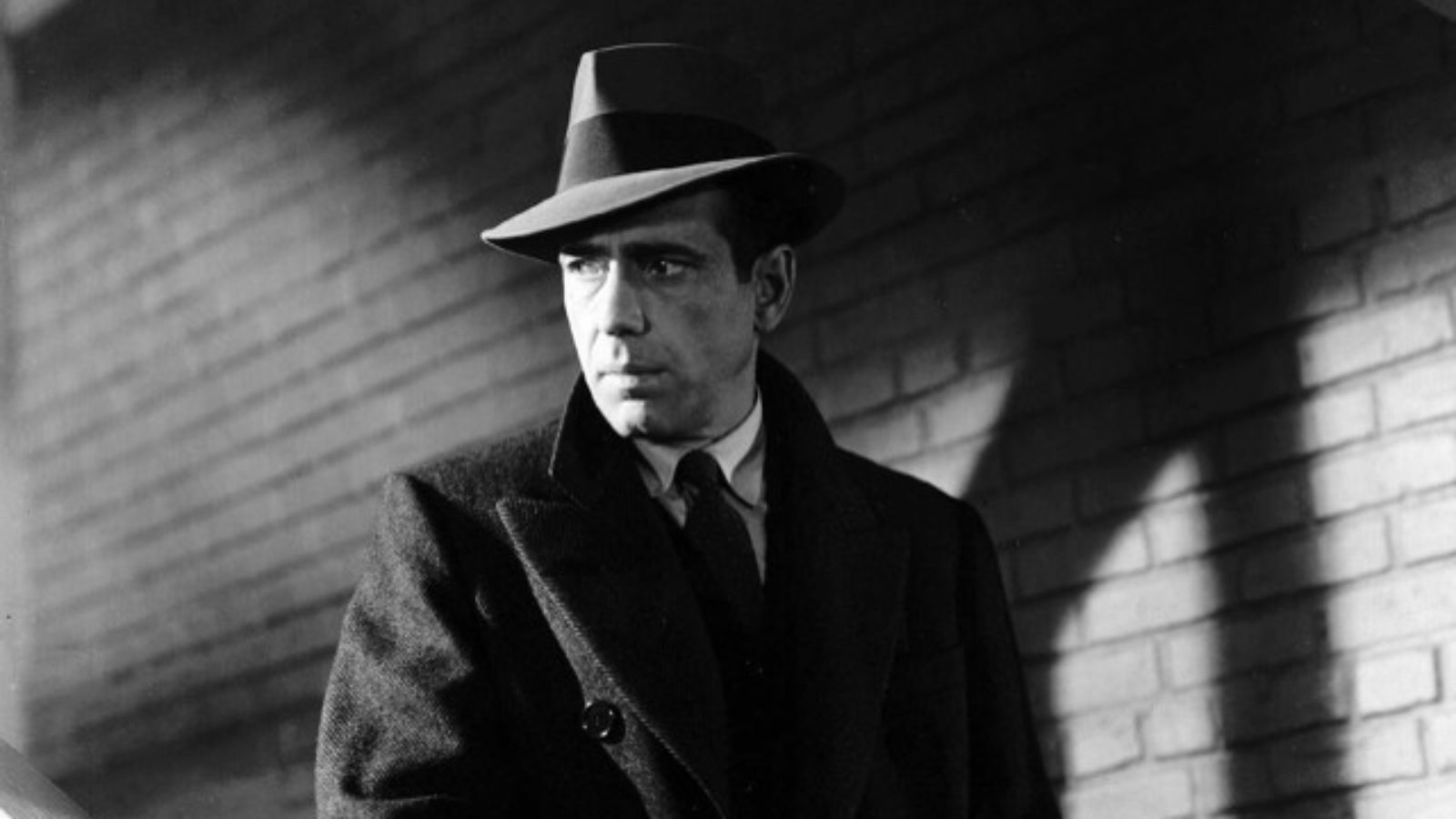
This is a still image from the video extract 'The Maltese Falcon' (1941). The use of low key lighting in this clip creates chiaroscuro which creates suspense and sets a bleak tone. The use of filler lights softens some of the shadowsThis creates the impression that he is of ill conscience as he is surrounded by shadows because of the connotations they hold.


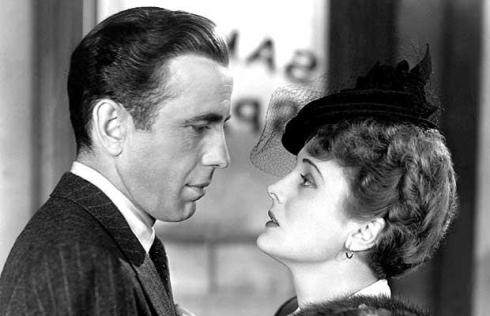
Again, this another still image from the same extract. The use of top lighting  accentuates the characters' facial features. This also allows us to establish that it is a romantic scene. The lighting also focuses specifically on the woman as she is likely to be the 'femme fatale'.

Task

Different Genres

This is a mystery film called 'The Virgin Suicides'. The first still image is an example of low key lighting as it is very dark yet it is back-lit so we are able to see the silhouettes of several men and of a hand. None of these characters have a specific facial expressions of anything distinctive about them which creates enigma as we are unsure of what is happening and who is who. This is very stereotypical in the mystery genre. The clothes in the scene are not particularly visible however the men appear to wearing some sort of uniform suggesting they have a sense of authority and could be police men, for example. The use of colour here is also quite important as it adds to the atmosphere of the still. The colours are very unsaturated as only a grey toned blue is used along with black and grey mostly. The main focus of this still is not determined but it is most likely to be the woman who's hand we can see. The use of props help the audience distinguish that she could be the antagonist. Perhaps the 'femme fatal' as they are commonly seen smoking because it is symbolic of being fearless and bold.

The second still, from the same film, has especially striking cinematography. It appears to be set in a domestic setting, most likely the girl's house in her bathroom. The use of the bathtub is significant as it suggests she feels impure and is metaphorically trying to wash away any immoral acts she has committed. Again, the colours here are very unsaturated and murky. This adds to the genre of the film because darker colours have connotations of gloominess and secrecy - stereotypical in a mystery film. The use of water here is also important because her face is partly beneath it which further reinforces secrecy and darkness. The lighting here is high key as everything in the scene is visible and we can even see reflections off the water.


This film is called 'Only God Forgives', it is a hybrid othriller and drama. In the first still the use of lighting is very significant as it is a huge indicator of the film being a thriller and perhaps having undertones of horror. The lighting casts a long shadow of the exit that spills through the corridor. This creates a sense of intimidation as we do not know what goes beyond the bright orange exit yet we still are fully aware that we will find out. The screen cap also uses mainly dark red and orange lights which insinuate fire and blood. It is associated with energy, danger, strength, power,  violence, determination as well as passion. Both red and orange are especially emotionally intense colours used to evoke instant reactions.

To continue, the second still is extremely similar in terms of colour use to the first still. This suggests that this film remains constant throughout. The lighting here is low key. Although     the colour lighting is so similar to the first, this still image is slightly darker which insinuates something menacing may happen and creates a sense of the scene being ominous. This particular image also gives the impression of sexual tones. The use of the woman's clothes  reinforce this because she is wearing a satiny, bright dress. The use of red is also present here, like in the first but could alternatively be considered to suggest passion rather than danger. The red could be used to represent desire and seduction. The red beads however, are only partly covering the woman suggesting she could be hiding something or that someone is watching her which is common in horror/thriller films. 


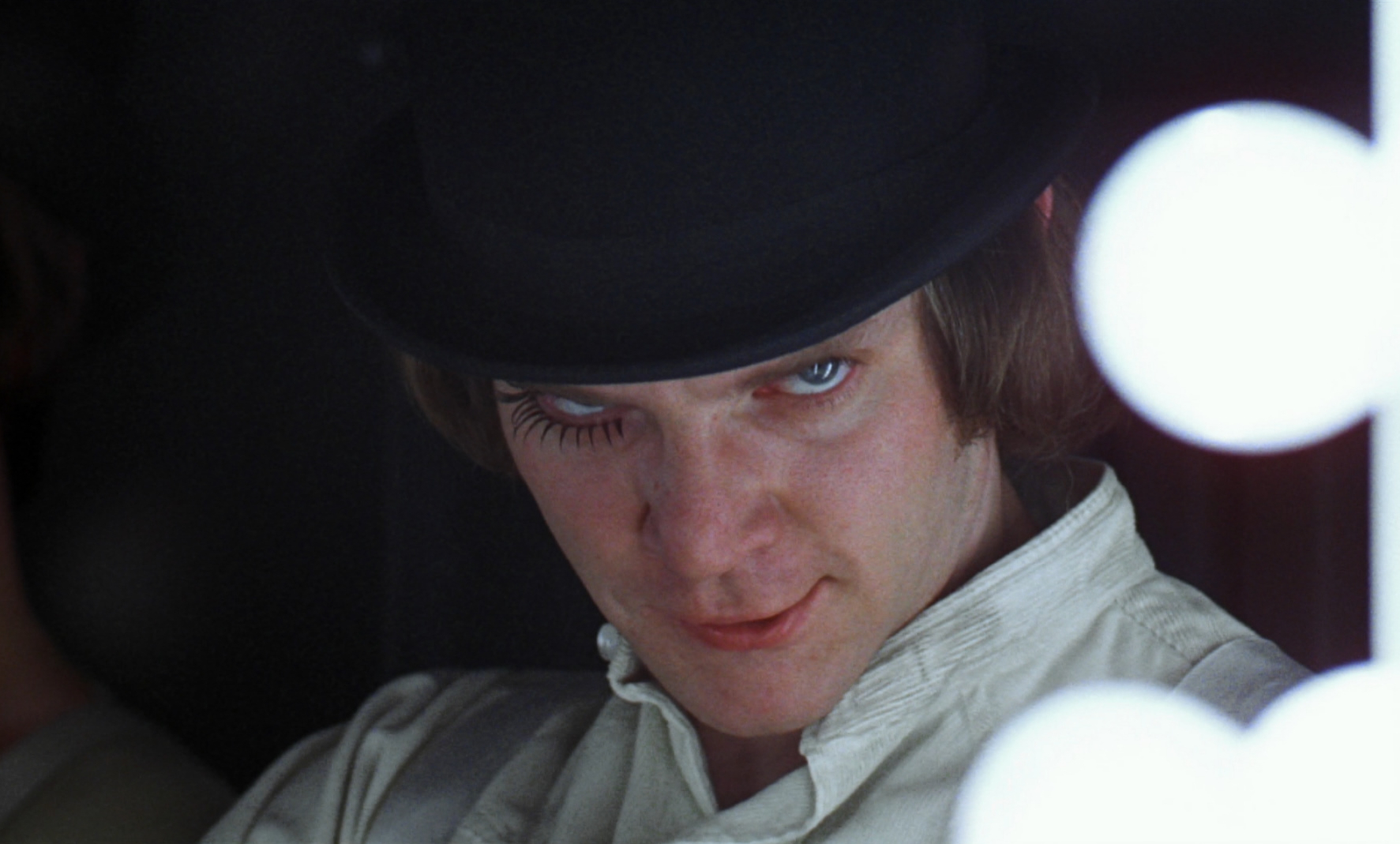
This is a still from the film 'A Clockwork Orange' which is a hybrid: Science fiction and  crime. The lighting in the first still is high key. The focus of the image has a slightly deranged facial expression. It appears to be overconfident and perhaps considered as narcissistic. The makeup here is also significant as well as very iconic. The makeup adds to the sense of this character being demented. As the character appears so disturbed yet so self assured and smug, it suggests he could be the antagonist of the film. 

The second still, from the same dystopian film is another example of high key lighting as everything in the scene is visible. However, there are still many shadows that have been created. This could of been created through a lack of filler lights. The imagery of these shadows is quite striking as it creates a sense of intimidation and danger. The costumes here are also incredibly significant as they also add to a sense of danger and instability that these men possess. The props also reinforce this as they are in control of weapons that could potentially cause a lot of harm and due to the sense of terror they create, we as the audience know they are very likely to use these weapons without second thought. These weapons are key conventions in both crime and sci-fi films.


Mise-en-scene task
Costume
There are several women standing in this still image who appear to be wearing elaborate wigs, rich embroidery and full skirts - common of 18th century fashion. However, in the middle there is woman who appears to be wearing only underwear and knee high socks. The still image suggests she is like an outsider in comparison to the other women and because her outfit is such a contrast to the women standing at each side of her, it emphasises how she perhaps may not be as conservative or obedient as they are. This suggests that the woman in the middle is likely to be the protagonist of the film because she is the outsider which has connotations of being misunderstood.

Lighting
The use of lighting is very interesting in this screen cap. This is an example of high-key lighting. This scene is back-lit as we can see through the gap in the curtains. It is also likely that they have used filler lights on the sides of the stage to soften the shadows.

Actor
The character is standing in the centre of the still image by herself suggesting she has confidence. Perhaps her body language suggests she is determined and driven because she is stood upright with good posture. Her demeanour may also suggest she has power which again is most apparent through her boldness (as she is standing alone in her underwear.)

Make up
The women at the sides of the curtain appear lavish and heavily made up. This is an indicator that they are likely to be higher class. In stark contrast, the woman in the middle seems to not appear anything but opulent. However, this may not be because she is not rich or of upper class but rather that she is rebelling. In addition, the main focus of the image appears more uncontrollable or free because of her hair which is slightly more untamed in comparison to the elaborate wigs the women besides her are wearing.

Props

The use of the chandeliers add a sense of elegance and grace. This is because they are often symbolic of enlightened wisdom. The thick, velvet curtains adds to a sense of prosperity and wealth. To continue, the women appear to be holding what looks like candle lights. This adds to the time era it was set in as it was the 18th century in which candle light was still commonly used.

Setting

The setting of this is quite ambiguous but we can assume that it is set in a grand house or stage area and that there is an opening through the curtain to the outside. It is unclear what the outside is or where it may lead to, but it is most likely to be an area forestry.

Questions

1.What do we learn about the character from the way he relates to his environment?
The character seems unsure of everything. Almost like he is not familiar with typical norms e.g he struggles with walking and is even unaware of cars.

2.What expectations do we have of the genre and narrative of the film?
It is quite visually dazzling yet it seems confusing. So I expect it is a Sci-Fi film. Also, the fact that the character is so phased by everything suggests he is not of earth and may be an intergalactic visitor.

Tuesday, 4 October 2016

Posters


Blade Runner is a futuristic, modern, sci-fi film about humans who have genetically engineered Replicants for labor purposes. The poster includes key conventions typically associated with the sci-fi genre such as the buildings that resemble UFO's or the use of props e.g. the gun. Also, the colour scheme uses strongly coloured images that jump out of the print, and powerfully evoke the film's themes of potential danger and darkness. To continue, they have included a sans serif font that further reinforces the idea of this film being very futuristic and modern. This also suggests the target audience are fairly young at around 16-28. Also the genre is primarily targeted at males rather than females. Furthermore, what is interesting is the fact that the actor's name is larger than the actual film title. This suggests the actor has an established fan base so the use of his name would help the film gain popularity. The use of a tagline in this poster adds enigma code as it raises questions and attracts the audience which also helps gain attention for the film. The actual poster focuses mainly on two characters who both are portrayed in different ways: good and bad. This is apparent through the expressions both the characters hold as the woman is almost expressionless whereas the man looks almost scared yet brave. Also use of lighting reinforces this idea because the woman is in the dark, her face is in the shade suggesting she may be trouble. This contrasts to the male who is in the light. Moreover, the use of the cigarette makes her appear even more dangerous and fearless. All of these small details suggest the idea that the woman may be the 'femme fatal'  or antagonist of this movie. The man is made to seem like the protagonist because of his contrast to the potentially deadly woman.
Scary Movie 2 is a hybrid. It contains the two genres: comedy and horror. This is most apparent through the  characters at the front. Their expressions are exaggerated suggesting their is an aspect of comedy within this film.The final reason why the film is likely to be in the comedy genre is the review at the top of the film poster saying "Absolutely Hilarious!” The colour scheme is conventional of typical horror films, suggesting the potential of danger and fright within the film. In addition, this movie is likely to be an example of satire or a parody. This assumption is based upon the references to other iconic films such as The Exorcist, The Amityville Horror, Poltergeist etc. This is an example of intertextuality. Moving on, the target audience of this film is likely to be late teenage males due to the overly sexualised women and humorous content. Moreover, the poster uses a sans serif font that works well with the modern feel of the film. To add to the use of several characters being the main focus on the poster, these actors are quite popular and therefore have already got an established fan base. This helps the film draw attention from the public.

Uzak is a film associated with the genre drama film. The poster includes a title of a foreign language suggesting it is a 'foreign' film or  of ‘world cinema. Also, it is an example of an arthouse film. This specific genre does not appeal to the wider population but rather targets individuals, mainly male adults. The poster itself includes a silhouette as an arthouse film does not necessarily need an established fan base from an actor in order to gain popularity and depends more on reputation which explains why there are longer reviews.  The poster also has a darker, sombre colour scheme suggesting the main themes of film centre around despair and anguish as dark colours insinuate suffering. The use of the weather (pathetic fallacy), specifically the snow also suggests it is  cold which again, has connotations of misery.

'I'm not Scared' is another example of foreign film and of world cinema as it is Italian. This film is under several genres including action, thriller, mystery, drama film and crime fiction which makes it a hybrid. The target demographic for this film is likely to be adults as it is an arthouse film. The designers have used a sans serif typeface and have drawn attention to the title of the film by using fire in the letters. This may suggest that the film will have an aspect of trauma within in or that it is a thriller.
It is obvious that this film is under the genre Crime because of the use of props (the weapons) and the expressions of the main characters have which appear to be quite dangerous. These actors' names appear just under the title of the film suggesting they already have an established fan base to attract attention to the film for it to do well. To add to the five actors that are the focus of the poster, we can imply that the protagonist or the 'leader' of the group is the male standing in the middle because the shot is tilted upwards to make him seem the largest and most dominant.  The colour scheme used here is mainly black and white but with the title in red. This gives the poster a mysterious and sinister feel, which attracts an audience. The demographic for this film is likely is be middle class 18-30yr old males.
Pirates of the Caribbean is a hybrid of fantasy, action and adventure. The story follows the Golden Age of Piracy has the key visual conventions of it such as ships, the skull & crossbones as well as the typical, conventional  colour scheme for pirates or any fighter based character. The actors are well known so their names are at the top of the poster to gain popularity as they already have an established fan base. The target audience for this film are likely to be teens or adults in their early twenties. The target audience are also more likely to be male rather than female.

The title is a play on the Jane Austen classic: Pride and Prejudice. This title alone suggests it could be a parody or a comedy and it is an example of intertextuality. There are also connotations of romance. This poster has a very vibrant colour scheme suggesting the story line may be very cheerful and untroubled. Also, the body language of the main characters and the fact that there is some sort of celebration behind the main characters suggest that this film is likely to be romantic. The film poster has a main cast of Asians and  so it is likely that it may be a Bollywood Movie which includes singing and music. Commonly, romantic, Bollywood movie attract a female fan base rather than a male one. This is why the target audience is likely to be directed more at females at around 25-30.
This film appears to be a crime, mystery and thriller hybrid. This is most apparent through the use of dark colours that have connotations of mystery and intrigue. There is also the use of red that suggests danger. The poster focuses on three main characters whose faces are all only partly visible. The fact that they are not looking directly, most specifically the women who is facing her back towards the camera not showing her face fully as if she has something to hide adds to the likelihood that this film has an aspect of mystery within it. Due to the woman being in the middle and the largest suggests she is the subject of the film. As the main focus is a female, it suggests this movie may be playing with stereotypical roles. The target audience are likely to be males from 18-30.